



Image
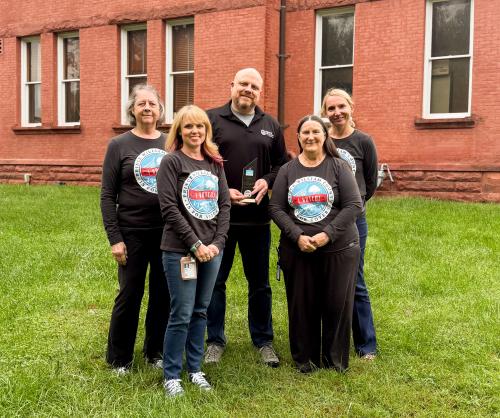
2025 Clearie Award Winner
As part of the 10th anniversary of the Clearinghouse Awards, the U.S. Election Assistance Commission (EAC) is spotlighting previous Clearie winners, including the Prince William County Office of Elections in Virginia.
The EAC interviewed Prince William County Deputy Director Natalia Taylor on the office’s 2025 Clearie award-winning program, “UOCAVA Connect.” It was recognized in the “Best Practices for Exemplary Services to Assist Military and Overseas Voters” category.
EAC Q&A: NATALIA TAYLOR, DEPUTY DIRECTOR, PRINCE WILLIAM COUNTY OFFICE OF ELECTIONS
1. How did you learn about the EAC Clearie program, and what motivated you to author your jurisdiction’s Clearie entry?
The Prince William County Office of Elections was already familiar with the EAC Clearie program because we have participated in the past. In 2024, our office received a Clearie Award in the category of Election Administration: Innovations or New Practices in Election Administration for our work posting election results tapes online. We also received an Honorable Mention for our “I Voted” Sticker Contest.
Those experiences showed us how valuable the Clearie program can be, not only for recognizing the work happening within an election office, but also for sharing ideas that other jurisdictions may be able to use.
When we looked at UOCAVA Connect and how much the program had grown over the years, we felt it was something worth sharing. It started with a fairly simple goal—improving communication with our military and overseas voters—but developed into a much more efficient and proactive way of serving those voters.
Submitting the program also gave us an opportunity to recognize the staff behind it. A lot of election administration happens behind the scenes, and programs like the Clearies give election offices a chance to highlight some of that work and share successful practices with colleagues across the country.
2. What problem were you trying to solve when you developed your UOCAVA Connect Program?
The biggest issue we were trying to address was communication.
UOCAVA voters can face challenges that most voters do not have to think about. They may be overseas, deployed, moving frequently, dealing with different time zones, or relying on international mail. They may also be unsure whether we received their application, whether it has expired, or whether everything is in place for them to receive a ballot.
We found that we were often responding to questions after a voter became concerned. We wanted to change that and become more proactive.
Instead of waiting for a voter to contact us, we wanted to reach out first—whether that meant reminding someone that their (Federal Post Card Applications) FPCA was expiring, confirming that we received and processed their renewal, or providing information about what they needed to do next.
The goal was really to make the process less uncertain for the voter. Even if someone is thousands of miles away from Prince William County, we want them to feel like they can easily stay connected with their local election office and know where they stand in the process.
Image
3. Tell us more about how UOCAVA Connect works.
UOCAVA Connect is a locally developed database and communication tool that helps us manage the lifecycle of FPCAs and communicate more consistently with our military and overseas voters.
One of the main things the program does is identify voters whose FPCA has expired or needs to be renewed. We can then send them an email explaining what action they need to take and provide the appropriate forms and instructions.
Depending on the voter’s situation, they may need to renew their FPCA, let us know that they are no longer military or overseas, or, in some cases, submit a signed request to cancel their Virginia voter registration.
Once we receive an updated FPCA, staff review and process it as they normally would. After that, UOCAVA Connect automatically sends the voter a personalized acknowledgement confirming that we received and processed the renewal. That email can include their new FPCA expiration date, ballot type, delivery method, and primary preference when applicable.
That confirmation has been very important. For someone who is deployed or living overseas, receiving a mailed acknowledgement is not always practical. An email lets them know much more quickly that everything has been received and that they are set for upcoming elections.
Over time, we have tried to automate as much of the routine communication as possible. The system handles most of the reminders, acknowledgements, and status communications with minimal staff oversight. Staff mainly become involved when there is an exception, an unusual circumstance, or something that requires individual follow-up.
The program actually developed gradually over several years. We were already sending manual FPCA acknowledgements and courtesy expiration reminders because we felt it was good customer service. As the number of voters and communications increased, we realized those practices could be automated.
That allowed us to keep the same level of personalized service while significantly reducing the amount of repetitive manual work required from staff.
4. What impact has it had on your voters and the election office?
The impact has been very positive on both sides.
For voters, we think one of the biggest benefits is reassurance. They are receiving information before they have to ask for it. They know when their FPCA is expiring, they know when we receive their renewal, and they receive confirmation that their record has been updated.
Over the last two years, we have received many emails from UOCAVA voters thanking us for those communications. We have had voters specifically tell us that they appreciated being reminded that their application was expiring and, just as importantly, receiving confirmation afterward that we had processed the renewal and that they were all set.
For our office, automation has made the process much more manageable. Staff are no longer spending nearly as much time sending the same types of reminders and confirmations individually.
It has also helped with consistency. The voter receives the appropriate information at the appropriate point in the process, and staff can focus more attention on the cases that actually need individual review.
During a busy election cycle, that makes a real difference. We can provide a higher level of customer service without creating an additional workload that becomes difficult to sustain.
Image

5. What advice would you give another election office interested in developing a similar program?
We would recommend starting small. You do not need to build a complicated system immediately. Start by looking at the questions your UOCAVA voters ask most often or the points in the process where they tend to experience confusion.
Maybe voters are unsure when their FPCA expires. Maybe they frequently contact the office asking whether their renewal was received. Those are good places to start.
Create clear and consistent communications around those moments first. Once that process is working well, look at what can reasonably be automated.
Automation has been extremely helpful for us, but we still believe there should be a way for staff to review exceptions and step in when something does not fit the normal workflow.
I would also recommend paying attention to voter feedback. Some of the improvements we made came directly from seeing where voters were still confused or where we could provide additional information.
The program does not have to be expensive or highly technical to make a difference. Even a simple tracking process combined with proactive communication can improve the voter experience and reduce repetitive work for staff.
6. What would you tell other election officials who are considering submitting a successful practice for a Clearinghouse award, but haven’t yet?
We would tell them not to assume that their idea is too small or too routine to submit.
Election offices are constantly solving problems. Sometimes we become so accustomed to a process that we forget it may actually be innovative or very useful to another jurisdiction.
It does not have to be a large technology project or something that required a significant amount of money. It may simply be a better way of communicating with voters, organizing a process, solving a recurring problem, or making staff more efficient.
One of the strengths of the Clearie program is that it gives election offices an opportunity to learn from each other. Something your office developed because you needed to solve a local problem could be exactly what another jurisdiction has been looking for.
We would also recommend documenting the process as you go. Keep track of why you made a change, what you tried, what worked, what you changed along the way, and what feedback you received. That makes it much easier to explain the story behind the program later.
Most importantly, we would encourage them to submit. It is a great opportunity to share the work your team is doing and to give staff recognition for the ideas and effort that often happen behind the scenes.
7. Anything else you would like to add?
One of the things we are most proud of is that UOCAVA Connect was built around a very simple idea: making it easier for military and overseas voters to stay connected with their local election office.
These voters can face circumstances that make the voting process more complicated, and we wanted to remove as much uncertainty as we could through better communication.
At the same time, we knew the process had to be sustainable for the office. By automating routine communications while still keeping staff involved when individual attention is needed, we have been able to improve the voter experience without creating an unmanageable workload.
The program also reflects the work of our entire Prince William County Office of Elections team. It grew over time because staff continued looking for ways to improve the process and provide better service.
We are proud of what the program has become, and if sharing our experience gives another election office an idea that helps them better serve their military and overseas voters, that makes the program even more meaningful.