



Image
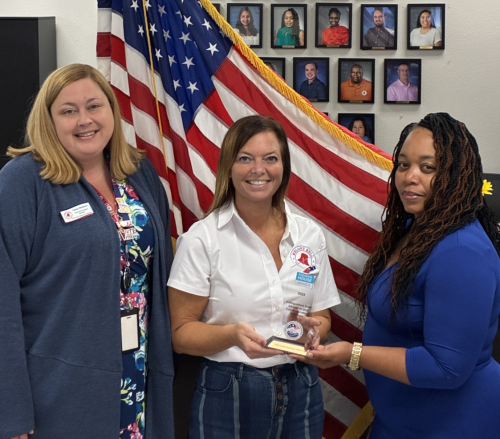
2025 Clearie Award Winner
As part of the 10th anniversary of the Clearinghouse Awards, the U.S. Election Assistance Commission (EAC) is spotlighting previous Clearie winners, including the Polk County Supervisor of Elections Office in Florida.
The EAC interviewed Melony Bell, Polk County Supervisor of Elections, on the office’s 2025 Clearie award-winning program, High School Voter Registration Outreach 2025 - 2026. It was recognized in the “Distinguished Voter Education and Communications Initiatives” category.
EAC Q&A: MELONY BELL, POLK COUNTY SUPERVISOR OF ELECTIONS
1. How did you learn about the EAC Clearie program, and what motivated you to author your jurisdiction’s Clearie entry?
We first became interested in the EAC Clearie Program after seeing other Supervisor of Elections offices receive recognition for their innovative programs. Their success inspired us to showcase the work being done here in Polk County and share our ideas with the broader election’s community.
When we saw the results of our redesigned High School Voter Registration Drive, we knew we had something worth sharing. We had taken a program we had conducted for years, identified areas where we could improve, and rethought how we communicated and engaged with students and schools. The significant increase in participation showed us that relatively simple changes in communication, preparation, and engagement could make a meaningful difference. We felt the Clearie Program was a great opportunity to recognize the hard work and creativity of our staff while also sharing those lessons with other election offices.
2. What was the motivation behind developing your office’s High School Voter Registration Drive 2025-2026?
Our primary motivation was to better reach Polk County's next generation of voters. We had been conducting high school voter registration drives for years, but participation had begun to plateau. We also faced practical challenges such as limited time on school campuses, busy academic schedules, and students arriving without the information or documentation they needed to register.
Rather than simply continuing to do things the same way, we looked at the entire process and asked how we could better prepare students before we ever arrived on campus. Our goal became not only to register eligible students, but also to educate them about the voting process and make their first interaction with our office positive, informative, and engaging.
Image
3. Talk specifically about how your program works and how your redesigned High School Voter Registration Drive works.
The biggest change was moving much of the education to before the registration event. We created a nine-minute educational video that schools could show students prior to our visit. It introduces the Supervisor of Elections Office, explains why voter registration matters, walks students through the registration process and lets them know what information they will need.
When our team arrives at the school, we reinforce what students learned through interactive trivia, giveaways, and conversations with our staff. We also introduced friendly competition among the schools, recognizing both the school with the most total registration transactions and the school with the highest percentage of eligible students registered.
Behind the scenes, we improved our communication with school contacts through reminder emails, personalized follow-ups, informational packets and materials for display. We also created a much stronger tracking system so we could measure registrations, participation rates and school engagement. Because students arrive better prepared, we were even able to reduce our staffing from four or five employees at each school to only two trained team members without sacrificing the quality of the experience.
4. Share how the redesigned High School Voter Registration Drive improved registration numbers and overall outcomes.
The results exceeded our expectations. During the 2024–2025 school year, our high school registration drives resulted in 529 voter registration transactions. After implementing the redesigned program, that number increased to more than 1,330 transactions during the 2025–2026 cycle -- an increase of approximately 151%.
What makes that result especially meaningful is that we accomplished it while reducing our staffing at each school from four or five employees to just two. But registrations are only one measure of the program's success. Students arrived more informed and prepared, our interactions became more efficient, schools became more engaged in the program, and we developed better data for measuring participation and improving future outreach. Most importantly, we were able to make voter registration an educational and positive first experience with the elections process for thousands of young people.
Image
5. What does recognition by the EAC’s Clearinghouse Awards mean to your office?
Being recognized by the U.S. Election Assistance Commission is an incredible honor for our office and our entire outreach team. Election administration involves a tremendous amount of work that the public may never see, so national recognition of a program like this validates the creativity, planning and dedication our staff puts into serving Polk County voters.
It is particularly meaningful because this award recognizes work focused on young voters. These students are just beginning their lifelong relationship with the democratic process. Knowing that a program developed here in Polk County is being recognized nationally -- and could potentially serve as an example for other jurisdictions -- is something our office is extremely proud of.
6. Would you recommend other jurisdictions submit a Clearie entry?
Absolutely. Election offices across the country are constantly developing creative solutions to challenges unique to their communities, and the Clearie Program provides an opportunity to share those successes.
A program does not necessarily have to be expensive or complicated to have an impact. Our experience demonstrates how changes in communication, preparation, tracking and engagement can dramatically improve results. Sharing those ideas allows election professionals to learn from one another and potentially adapt successful programs for their own communities.
We would encourage other jurisdictions to look at the programs they are proud of, document their results and submit them. Their idea may be exactly what another election office needs.
7. Anything else you would like to add?
One of the most rewarding aspects of this program is knowing that its impact extends beyond the number of registration applications completed. For many of these students, our high school registration drive is their first direct interaction with the elections process.
We have an opportunity during that interaction to show them that elections are accessible, that their participation matters and that their local Supervisor of Elections Office is a resource they can trust throughout their lives as voters.
We are incredibly proud of the results, but we are equally proud that the program has helped us build stronger relationships with our schools and introduce thousands of young people to civic participation in a positive and engaging way. We look forward to continuing to build on its success.