



Image
2024 Clearie Award Winner
The U.S. Election Assistance Commission (EAC) is celebrating 10 years of the Clearinghouse Awards in 2026. Also known as “the Clearies,” these awards highlight best practices in election administration and applaud the accomplishments of election officials nationwide. As part of the 10th anniversary, the EAC is spotlighting previous Clearie winners.
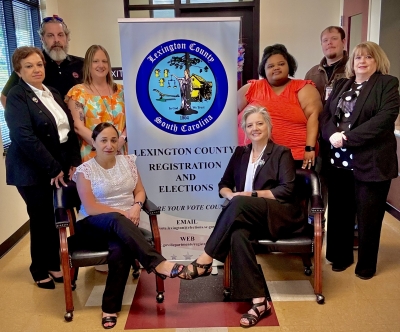
The EAC interviewed Lenice Shoemaker, Director of Lexington County Voter Registration and Elections in South Carolina on the office’s 2024 Clearinghouse Award for Contingency Planning: Exemplary Contingency Planning and Emergency Response Efforts in the Small/Medium Jurisdictions category.
Image

Lexington County Voter Registration and Elections was recognized with this award for two innovative training initiatives focused on improving communication with voters and enhancing the election experience in challenging situations. The first was an Emergency Flip Book designed as a quick-reference guide for poll workers to use during emergency situations. The second program consisted of situational training aimed at equipping clerks with the skills to manage public interactions calmly and professionally. Both programs emphasized respect and professionalism, reinforcing the principle that voters are valued customers in the democratic process.
EAC Q&A: LENICE SHOEMAKER, DIRECTOR OF LEXINGTON COUNTY VOTER REGISTRATION AND ELECTIONS
1. How did you learn about the EAC’s Clearinghouse Awards and what motivated you to author your jurisdiction’s Clearie entry?
I received an email very close to the 2024 election inviting me to enter the Clearie Awards. I knew we had a great program, and I wanted to share it.
2. What was the motivation behind creating your Emergency Flip Book and Election Clerk Situation Training Program?
My office staff and admin consultants began to put our heads together on how we could get feedback on our elections. We settled on hosting roundtable meetings with poll clerks, workers and board members. We asked the hard questions and were grateful to get wonderful feedback that we addressed in planning our training and education programs. We addressed the need for de-escalation training, how we could initially get this training and how to bring it to the precinct level. One of our clerks reached out to me stating her office used de-escalation training, and she would reach out to the trainer to see if he could help us. We gave him insight into what issues the clerks were up against at the precincts and he devised a PowerPoint presentation we could use in our training. We then addressed the need for emergency awareness at the precinct as well as emergency training. We were trying to find a guide that was not just a “knee jerk reaction” to an emergency. We needed initially to identify what emergencies could happen, like fire, floods, inclement weather, aggressive behaviors, etc. How were the clerks going to keep voting in an emergency? What actions do they need to take? Do we move to another room? Out of the building? To a different location?
Image
We addressed the equipment and duties of the poll workers. We settled on giving duties to each station and what each worker was responsible for. Once we had that information, we thought, “How do we put this together in an easy format?” To be truthful, we were not sure. I happened to have a doctor’s appointment and noticed that they had a guide sitting behind the receptionist. That was it! We needed our own flip book! Once the thought was brought to the team, we addressed each of our own emergencies and devised how each situation should be handled. The board worked with me to clarify additional verbiage, and the flip book was born! We took these two programs along with our ADA and hands-on training and comingled them in the training for our poll workers.
3. What results have you seen since the implementation of your Emergency Flip Book and Election Clerk Situation Training Program?
Many hours were dedicated to these programs and because of this, we had no incidents to report during the largest election of our history, the 2024 presidential election cycle.
4. What does recognition of your jurisdiction’s entry by the EAC’s Clearies mean to Lexington County and what early impact has that recognition generated?
We are extremely proud to be recognized by the EAC’s Clearie program. The national recognition allows us to show case the amazing job this office performs, not just on Election Day but all year long. I’m sure even Mike Rowe would make high ratings if he took on our “Amazing Jobs.”
5. Would you recommend other election jurisdictions author and submit a future Clearie entry featuring one of their “Best Practices” and why?
I would like to encourage other directors and election officials to submit your programs to the EAC’s Clearies. It is through the networking of election officials that the State of South Carolina’s Office has been so successful. Sharing how you conduct elections may be just the answer to an issue that other offices have been struggling with. There are best practices that need to be followed. If every office in the nation conducted elections the same way, there would be less apprehension of practices. We all could trust that the same important guidelines were handled in similar fashion.